Monday, June 6, 2016

A Bicycle's Eulogy

It's official. The bike of my upbringing has finally gone belly up.


This has been my horse, my cruiser, my motorcycle. So many memories. All the sweat and soreness, all the struggles up the BYU hill, all the trips to the library. Learning to let go, adjust the brakes (hate that chore), take the tires off, adjust the seat height, and change inner tubes. Crashing outside J Dawgs. Granted, I'm not totally broken up about it, but this bike has been a part of many parts of my life for quite a while.


The problem becomes: what do I do with it now? Sentimentality says to keep it. Practicality says to dispose of it. Frugality says to break it down and keep the parts worth keeping. We don't have a garage. It doesn't seem very sightly to just leave it outside, exposed to the elements, though it would be an interesting observation experiment to watch it rust and degrade back to the elements. Suggestions?

Sunday, August 9, 2015

Signs of Change

Just a hunch, but I think things might be a little different in the near future. Just judging by a few
scenes I've noticed around. You'll have to take a look and tell me what you think.

Let's visit this apartment...or maybe live there.
Cream puffs. Home made!
That's a pretty post. New bed!
Ooo, sparkly...


Pretty, pretty flower.
Who is that?

Hey, he makes me smile.

Yeah, I think he's kind of important.


Yep, I think I could get used to this. Change is scary and we naturally resist it. But I think this will be a good change. At least, so I've been told. So....here goes! New people, new experiences. Level up. :)

Monday, December 8, 2014

Statistics on the Theme of a Christmas song


I had an interesting experience at a certain nursing home yesterday. Seeing as I am considering entering the field of geriatric research (read: I'm mucking around on an Alzheimer's project my mentor was kind enough to let me join in on), I figured I should probably get over my aversion to the elderly. Hence the nursing home excursion in the first place. But I digress. While we were there visiting with a real peppy lady, a group of young adults came in to sing Christmas hymns. Mind you, they were stressing the hymn part pretty strongly; they were not there to carol. At least, this was the sentiment expressed by the spokesman. I found his attitude rather amusing, and apparently so did this lady, because when asked what hymn she would like them to sing, she went with "Let it Snow! Let it Snow! Let it Snow!" The leader fellow was obviously a little put out, but the rest of his troop promptly burst into such an energetic intro that our recipient had to turn down her hearing aid. Having finished, this fellow again asked if there was a hymn she'd like to hear. Her response: "Over the river and through the woods." Again, the poor fellow was disappointed, but the group was evidently tired of the same 5 hymns in every room and so again obliged. However, as the song progressed, more and more dropped out. By the end, it was my roommate and I who triumphantly brought in the end of the song. Needless to say, we only did one verse of that one.

Which brings me to my point. I was really surprised that people didn't know this little gem of a song. It's pretty short (especially if you only do one verse) and it's pretty simple. Admittedly, it is a little antiquated and, according to Wikipedia, was originally written as a Thanksgiving song, which explains why it isn't often sung. But I was still taken aback to find such a small percentage who knew it. So, being the inquiring scientific mind that I am, I deigned to design a study (read: I asked the people I interacted with today whether they knew the song). The results: no one, apart from my roommate in the original instance, could actually sing the song through one verse.

[Note to the reader: the next paragraph is dripping with sarcasm and hyperbole.]
Although I know you will agree that this study embodies the essence of good science, some caveats do exist (my statistics professor ought to be so proud). I will admit that my sample size is dismally small (n=a dozen and a half or so - I know, real precise) and was selected in a rather biased manner, i.e. only my roommates and academic friends were considered. Nevertheless, I must conclude that I am one of the few left in the population in possession of this knowledge, granted I could only sing one verse with confidence. Thus, I thought I would take it upon myself to disseminate this valuable piece of Americana and enrich your holiday season. I have fond memories of listening to this on a Disney sing-along cassette tape during my childhood and would be miserly of me if I didn't let you in on the creation of your own fond memories.
For those of you unfamiliar with this relic.
♫Hurrah for old techno toys!♪
Tell me this doesn't make you smile?

In other news, despite my above animation, I am looking forward to the termination of my statistics course with great anticipation. Only one more hurdle - the final, which, fortunately but unfortunately, has been divided into 3 parts. Wish me luck!

Monday, September 1, 2014

Vault Discovery: A Word on Merging

I discovered a piece a wrote at the beginning of the summer and never posted. So here it is.

Originally composed June 19:

I recently participated in Summerfest and found it to be rather enjoyable - the food, the rides (Samantha and I have made excellent progress toward Tilt-A-Whirl expertise), and the fireworks display were all superb.

Intense concentration - or maybe the handle was dirty...

Lean!

Your other left!

Thanks for taking the pictures mum!

Notwithstanding, it was my experience in the parking lot which inspired this piece.

Merging. It's actually a fairly simple concept. Two lines become one. I recall that when I was being initiated to the road by my father, he explained that it should work like a zipper - or a "zip" as they call them across the pond. In any case, this being an object I was quite familiar with, the simile stood as an adequate explanation and I was confident that the general population was also equally well-versed in the fly-securing book-enclosing apparatus. Thus, one driving phenomenon could be checked off as a worry free occurrence.

Alas, experience has dictated otherwise. I don't know how other people's zippers work, but mine always follow the same pattern: one left tooth, one right tooth. One left tooth. One right tooth. Repeat previous sequence until all teeth have been assimilated. It's a very simple pattern. Merging should work in precisely the same way. Yet in this advanced age, people seem to want to complicate the pattern. One left car. One right car. Three left cars. One right car. Twelve left cars. Three right cars. One left car. Five right cars. I don't know about you, but I am hard-pressed to find the pattern. And can you imagine what your zipper would look like if it tried the same antics?

To those of you privileged to be instructing the next generation of vehicular operators, I have a simple request: covey the merging pattern. And the rest of us could do to take a lesson from the past, when times were slower. Can you imagine if driving were like it used to be?

Clip courtesy of The Andy Griffith Show

Thursday, June 19, 2014

Greatness long overdue

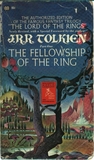
The Fellowship of the Ring (The Lord of the Rings, #1)The Fellowship of the Ring by J.R.R. Tolkien

My rating: 5 of 5 stars


This book is definitely a classic for a reason. I admit, I began it in large part to placate my sister and to check off one of those "I can't believe you still haven't read that" books off my list. I don't know exactly what I was expecting, but I guess I was expecting it to be a little bit more geeky. A conversation I once had sums it up really nicely: it's not fantasy, because it's written to be more believable; the elements of "magic" are not over-the-top impossible, but in a future state of our universe could be seen as plausible. However, they serve more as thematic elements, extensions of the better part of human virtue. It is also written with the air of a historian; Tolkien was really fleshing out the history, culture, and language of a land that he had invented so completely that it could very well exist. Thus it would be more like historical fiction. However, this it cannot be, as that genre is usually rooted in actual historical fact, and as much as we wish it were true, Middle Earth does not actually exist anywhere but the imaginations of we the readers. Thus we concluded in that conversation that The Lord of the Rings is fictional history.

I'm not sure whether I consider it a pro or con, but Tolkien spends and extraordinary amount of time describing the scenery, painting the environment with words descriptive, but not overly flowery. If I had attempted to read this when I was younger, there is no way I would have gotten through it. Those kinds of passages take a lot of concentration for me, especially when they matter so much to the story and the experience of Middle Earth as a whole. I don't know if it was because I wasn't paying attention well enough by that point, but after Lóthlorien, I got really directionally challenged as pertained to descriptions of the compass rose. But as it ultimately doesn't affect the fate of the quest, I contented myself to understand that Mordor lies ahead and it is to that destination that the fellowship is reluctantly moving.

Pros:
The hobbits are characterized extremely well, especially if one reads the introductory material. They may seem simple folk, but their motivations and culture are nonetheless engaging and understandable and do not give the impression of flat stereotypes. It is interesting that they can be at once so old in years, at yet so young at heart.

The passages pertaining to characterizing Aragorn are exquisite. He is given such an air of mystery, yet you know that behind the shadowy façade, there are incredible depths. He knows so much and has such strength yet reserve, such patience. What I want to know is when he found time to gain such experience and knowledge. And when he sleeps. It seems like he never sleeps. But I guess that is one of the signs of greatness in any good literary leader. Anyhow, when we are first introduced in Bree, I was practically screaming at the hobbits to trust him. Why would they not? Couldn't they feel the good intentions radiating from him? But then, I'm coming from a biased hindsight position.

Getting to Rivendell was a delightful journey, probably the most compelling for me. Glorfindel is such a fantastic character who plays really well off of Strider. It is awesome to see how men and elves really can work together and each can contribute equally to the success of all. The bit where they came across the trolls added a nice levity to an otherwise grave situation and is a nice cameo to The Hobbit who came before.

The council of Elrond was one of my favorite parts. All the elements of the story are woven together in such a way that you get the entire picture of just how grave the situation of the world has become. Yet it isn't pedantic or dull, one character after another droning on and on about what happened in their region. It is all tied together beautifully, centered around the issue at hand and what is to be done with the Ring.

I particularly enjoyed the incident at the pass of Carradras. It was so artfully thought out, and really adds to the validity and characterization of the Ring itself. The concept that the landscape itself is taking sides in preparation for the great conflict to come is beautiful. Along that same vein, the incident in the forest with Tom Bombadil was incredibly intriguing. That there could be anyone so impervious to anything but his own affairs when such a polarizing effect is going on in the rest of the world is interesting. Yet it would take just such a person to be able to care for a place such as the forest, so confusing and befuddling to those with a narrow view of their desired direction of travel. Moria was a good episode, and much as I hate to admit it, the film adaptation was playing through my mind throughout, particularly the soundtrack; that part is very well done, I might even venture to say better than the book.

Cons:
Tolkien is so enthralled with his scenery and languages that he often fails to develop his characters. Legolas and Gimli were two such characters; it's almost as if he forgot they were part of the fellowship until he decides to through some racial/political bits in and they uses them to spar. You don't get a good sense of where they have come from or what is most important to them.

The songs got a bit longwinded at times. But that's me being picky. In point of fact, I'm rather impressed that everyone is so well-grounded in their traditions and can use that method to transmit their histories to others. It makes me wish we in the real world knew so much about where we have come from and could recount it more artfully than to recite dates, names, and places.

Overall, it is a great book. Great themes: friendship, standing against evil, treachery and betrayal, the corrupting influence of ultimate power, and the virtue found in simple things. Despite my poor initial motivations, I am better for having read it.


View all my reviews

Monday, June 9, 2014

A Desert Adventure

Last week I went shooting with my father. Having amassed a variety of bottles, buckets, and jugs, we decided to go out into the land around the lake so we could cause explosions without fuss. As we're driving around scouting out suitable set up locations, Dad commented that the road seemed rougher than usual, but we didn't make much of it. We finally pulled into an open area next to an old rusted truck that had been deserted long ago and Dad got out to check a hunch. Sure enough, we had a flat.

As we were struggling to figure out how to get the spare off (it was bolted pretty securely to the underside of the bed), pushing off thoughts of succumbing to the same rusty fate as our new-found relic, another truck came by. They were from the County and were sent to look for a particular landmark or some other such business. They asked if we were shooting and would we please not shoot them until they had come back in about 15 minutes. We assured them that we would be occupied at least that long with the tire. We'd made no progress by the time they returned, and they offered to lend a hand. After banging around themselves, they were at as much of a loss as we were. They then offered to drive us into town to either get the old tire repaired or replaced. They seemed nice enough guys, but in Dad's words, we had four choices:

1. We could both get in their truck and leave our truck and all our munitions unattended in the middle of nowhere.

2. Dad could go with them and leave his daughter, the truck, and all our munitions in the middle of nowhere.

3. He could send his daughter with the two complete strangers and stay with the truck and all our munitions in the middle of nowhere.

4. We could send them on their way and be stuck with the truck and all our munitions in the middle of nowhere.

After some consideration and a glimpse of garments on stranger #2, Dad decided the guys were reasonably trustworthy and opted for choice #3. So the tire and I hopped in the rescue vehicle and took off down the road. I knew this was going to be even more of an adventure when I realized as we were driving away that I had left my phone in my car at the parents' house. So I had to content myself with sending positive brain waves back to my dad so he wouldn't worry too much and the consolation that I was armed.

About an hour later, I had found out quite a bit about Carlos and John - schooling, family, occupation, some entertaining anecdotes, and thoughts on travel and history. We'd visited 3 tire shops. At Walmart we learned that the tire was blown so repair was out of the picture, but despite 3 or 4 technicians blatantly sitting around, they were "busy" with 3 cars in front of us so it would take 1.5 hours to fix. No way were were going to sit around for that long, we moved on to a local Joe who, despite advertising "tires" on his building, actually orders in all his tires so he couldn't help us. Third time the charm, Big O Tires fixed us up with an $80 tire in about 10 minutes, the computer taking longer than the actual tire replacement. Back in the "limo," my chauffeurs kindly offered to stop wherever else I wanted - "drink? a show? the airport?" - and after a laugh were back on the road to the lake.

Meanwhile, Dad had taken shelter in the 14" of shade on the north side of the truck lying on the table we brought to put our guns on, worrying that getting back in the truck would cause it to shift off of the jack. I later pointed out that if the truck was going to come off the jack, all the banging around trying to coax the spare off would probably have done it. But water under the bridge. Carlos and John helped us get the new tire on and made sure we were all set before leaving. Come to find out, while we were gone, another car came up to shoot and had also suffered a flat tire. So Carlos and John trotted off to help them. I couldn't help but laugh; I guess they were destined to be the tow truck for the day. I didn't feel real sorry for the other car though - why would you drive a little lime Ford Focus into the wilderness?

Anyway, 2.5 hours later, we were finally able to get some shooting in.
(Yes, this was from a different shooting trip, and yes, my aim has much improved since then.)

Lessons learned:
~ Always prepare for the unexpected. Translation: have tools with you when striking out for the desert
~ Bring water (peanut butter crackers alone tend to do more harm than good) and
~ If you want to practice aim, it might be better to go to a range.

But if your goal is to make things explode, red food dye in water in a salsa bottle is a great way to vent any frustrations from life.

Thursday, May 15, 2014

Another enchanting review of Charlie Bone

Charlie Bone and the Invisible Boy (The Children of the Red King, #3)Charlie Bone and the Invisible Boy by Jenny Nimmo

My rating: 4 of 5 stars


Once again, Charlie Bone has proven an enjoyable diversion. The question of invisibility must always come up in any good magical series, and the treatment of the theme here was fascinating. I've never thought about it before, but there is something inherently deceitful about hiding one's presence, be it in darkness or actual disappearance. Thus, powers of invisibility could be seen as evil and undesirable, which angle I've never considered.

It's also interesting to consider that this is the second time that misfortune has befallen a character just because he was curious. It's interesting that these curious characters also seem to be fairly helpless when it comes to resolving their situation. Ollie didn't do anything to help, yet it was pretty clear that he wasn't being watched very closely, so it would have been fairly simple for him to play a more active role in his rescue. To me, curiosity and cleverness seem to go hand in hand, so he ought to have been more forthcoming with suggestions for a solution.

Pros: I am SO glad they have finally started making up with Billy. I could sense all along that he really belongs on the good side. But upon closer reflection, I realize that Billy has needed to engage in this development to realize that even though he is small and alone and scared, he still has the power to resist the opposition and make a difference. He's not just a weaselly little spy whose services are given to the force which provides the best benefit.

While it was a bit frustrating, the Yewbeam castle encounter for Patton was a really good move; I hope this means that he will become a more active force who is in control of his endowment. His taking a stand against his sisters has been really fun to watch. I'm not sure how I feel about the attempt to test his "relationship" with Julia. I think there is enough instability in Patton's life and it would be really good to just allow that to be the one good thing in his life, perhaps even the significant driving motivation.

Cons: I was surprised by the coat-turning of Scarpo; that was unexpected, but definitely not unwelcome. However, I wish that the wand would have been a more prominent presence if it was going to be introduced as belonging to Charlie and being so powerful. It needed to be more important to the plot development and conflict that it was. As it stands, it was almost more trouble than it was worth, what with letting Scarpo and the mouse out and the havoc it wreaked on the city, etc.

I wanted the explanation and denouement of Mr. Boldova's situation to be more clear. All of a sudden, he just appears with his memory intact from the Aunt's burning house? I'm not convinced. And how was it so easy to kill a shape-shifter? We can just electrocute them? It seems that, if that were a way to kill her, she would have been more wary of being next to such appliances, especially when she is intimately aware of Patton's endowment.

Cons notwithstanding, this was still a plausible plot line and an entertaining story.


View all my reviews

Wednesday, April 9, 2014

The End of an Era


I never thought this day would come...well, that's not true. To be honest, I haven't really thought much about it. In fact, I never really have. Fade back to 5 years ago. It's senior year of high school - the year everyone has been looking forward to since 7th grade. Everyone else has been planning their post-graduation vacations for 3 years and have all the details all worked out. They are busy calculating just how much they can slack and still "pass." They're like hounds, straining at the leash, just waiting to be released. Pan to the corner of the library [ok, in reality I worked on the floor in the hallway, but this is a flashback and sprawling on the floor isn't very idyllic]. See, I'm the kind of girl who keeps her head down... way down - nose pressed hard into what I'm doing until someone takes it away. There I am, pounding away on French essays, English lit, and Stats homework, wondering what other classes I can squeeze in.  Then all of a sudden, it's candy-red cap and gown, stand in front of the "A," and shake the principle's hand. Wait, what just happened? Oh, right, I graduated from high school. Cool. Didn't really see that coming, but great! Now what? Oh right, go to BYU; go be a big kid out in college land. Where they have even more cool classes and bigger hallways... *cough*, err... libraries. Ok, I can deal with that. So long Cavemen!

Fast forward to now. It's happening again! As if the graduation they just attended wasn't enough:

After all, didn't you just do that?
And once again, everyone is buying swimsuits, and planning big excursions to Thailand, and trying to fight off senioritis long enough to scratch a B out of all their classes. They're just itching to snatch that diploma and move on to bigger and better things. I will admit, a small part of me wants to join them. No more jumping through professors' hoops; I want to do what I want to do. But mostly I'm the lab partner who insists we come in late at night to finish the experiment and get the lab notebook done now, the student who does the homework even though it's the last one and is going to get dropped anyway, and who actually tries to study for the exams.

But, like it or not, we have come to the point of this post:
I am about to officially graduate from college.

That is such a strange notion. It seems my entire life I have been nose to the books, cramming all kinds of interesting odds and ends into my brain. School is what I do. School is what I'm good at.

Sure, I'm looking forward to summer as much as the next guy, but instead of going on a pointless trip (granted, I wouldn't say no to DC, but this girl doesn't have money for that), I'm mostly looking forward to working through old textbooks and playing around on Khan Academy. The bigger emotion preying on my mind?


Wednesday, March 5, 2014

Learning: Make it what you want!


I love this kid's ideas! I wish we could incorporate this mindset into more of our educational experiences - to all our life experiences, really. Kids should be able to take charge of their learning and direct their education to suit their individual talents and interests. There is a reason for teaching and learning all those traditional, classical subjects; let's apply them to life! Learn because you want to, not because you have to pass a test.

Thursday, January 30, 2014

A little Magical Diversion

I've been listening to audio books as my study break - which happens while I drive from one place to another. I know, really boring. But ya gotta do whacha gotta do, especially if you're like me and planning of graduating in April! I can't believe I've almost achieved such a big milestone. Anyway, here are some thoughts from the last audio book I finished.

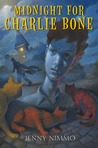
Midnight for Charlie Bone (The Children of the Red King, #1)Midnight for Charlie Bone by Jenny Nimmo

My rating: 4 of 5 stars


Initial thoughts on completion:
This is a great little story. The characters are really easy to sympathize with and the plot is really exciting. There are so many mysteries and questions that you want to solve that you can't help but keep reading. It does have a feel of an introductory novel, with just enough excitement and answered questions to keep you interested, but it brings up more questions than it answers. Some of the problems faced by Charlie and his seeming inability to see the answer right in front of him are sometimes frustrating, as it seems very obvious to the reader, but I suppose that is to be expected with a fictional work written in 3rd person omniscient meant for younger audiences.

I really like the character of Fidelio! He is really well-suited to his musical family and his eagerness to befriend and help Charlie are wonderful. His fearlessness brings a great balance to the uncertainty of the younger children around him. I hope they bring more of his family into future books. It's a shame he isn't endowed, but I think his presence as well as Olivia's is really essential to bring the reader in and to help us "normal people" feel a place in the story.

Olivia's rescue of Emma was brilliant, though her mother's willingness to comply with her requests blindly is a little unbelievable. Her curiosity should come in handy, and I hope they use her to go exploring Bloor's in future books.

Cons:
I would have liked more elaboration on the ruin scene and what exactly happened. I was also disappointed that they didn't spend more time redeeming Billy's character and friendship. His disloyalty is understandable, yet it was sad that he is soft of left as a fallen character. I would have liked a little more explanation of Aunt Venetia's cloak and some hint of the intention of the opposition mounted by the Yewbeam aunts and the Bloors. Finally, they needed to bring in Charlie's endowment a bit more towards the end, as he doesn't really play a role in the denouement; he is just helplessly rescued by those around him.

Favorite part:
I really enjoyed the bit where Emma escapes from the Bloors. Uncle Patton is also a favorite and though I wish he could control his endowment a little better, him putting his head up to help Julia is really heartwarming. And of course any part with the Flames is really exciting. I really like the fact that Aries and Charlie have such a bond.

Overall, it is an enjoyable diversion and a fairly quick read, so serves well as a study break.


View all my reviews

Thursday, October 24, 2013

A Joy Ride

The Great DivorceThe Great Divorce by C.S. Lewis

My rating: 5 of 5 stars


Initial thoughts on completion:
I didn't like this one quite as well as The Screwtape Letters. Perhaps it was because I read them so closely back to back or perhaps it is because I have come to expect short, quotable bits of wisdom from Lewis and this isn't exactly that. Anyhow, there were some ideas in it that I really liked. Firstly, the entire premise encompassing the idea that Heaven and Hell must be completely separated. In our world, we sometimes get caught up in the idea of tolerance to the point of trying to find the "good" in everything when sometimes there really isn't anything of value in it (homosexuality comes to mind, but let's not open that can of worms). There is a choice to make with everything we encounter in life - whether we are going to accept it and make it a part of us or leave it on the wayside. Many mistakenly believe that their traits and quirks are "just who they are," like there is nothing you can do about it. But we can always reinvent and redefine ourselves. I think that's what I like about the word "Divorce." It implies that we are taking something by which we formerly defined ourselves and are completely separating ourselves from it. It may seem obvious, but opposites cannot exist simultaneously in the same proximity. So of course if our ultimate destination is Heaven, we must leave the pieces of Hell we have picked up behind. Similarly, we cannot simply convert evil into good. We must go back to the point of the original mistake and relinquish everything from that point.

I love the idea that in essence it is our choices which determine whether we end up in "Heaven" or "Hell." I am of the opinion that we have freedom and power to choose and this extends even after death. If we will not be happy in Heaven, our choices will not lead us there. Those who thought they "wanted" to come to Heaven but were uncomfortable there were not forced to return to the Grey Town. They chose to return, and essentially judged themselves. Christ is constantly inviting; it is we who turn away. A line from a Ghost that illustrates this, found on page 31 reads as follows: "I'd rather be damned than go along with you." This to me is incredibly sad, but I know that people feel this way.

Another beautiful section on page 61: "The Ghost made a sound something between a sob and a snarl. 'I wish I'd never been born,' it said. 'What are we born for?' 'For infinite happiness,' said the Spirit. 'You can step out into it at any moment...'" We are never denied an opportunity to accept happiness. It is only when we refuse to make the choice that the opportunity closes. We get what we ask for because we are Loved. If we convert our will to the Lord's, we will get infinite happiness, because that is also what He wants for us; if we maintain our own will, he will give us the fruits of that will also.

Finally, the episode of the Lady and the Tragedian was fascinating to contemplate. Essentially, it is the confrontation of pity and joy. Joy says, "Did you think joy was created to live always under that threat? Always defenseless against those who would rather be miserable than have their self-will crossed?" The fact that she could be so unaffected by Frank's failure (or what I believe to have been a failure) was incredible to me at first and I had a hard time imagining being able to be happy in Heaven knowing that someone I love is not happy and has chosen eternal misery. But I guess that's what God experiences all the time. His children are constantly choosing their own misery, preferring to be "rulers in Hell than servants in Heaven." Then I came across this passage that explains why misery and the passion of pity cannot prevail: "The demand of the loveless and the self-imprisoned that they should be allowed to blackmail the universe: that till they consent to be happy (on their own terms) no one else shall taste joy; that theirs should be the final power; that Hell should be able to veto Heaven."

Cons:
I did not like reading each of the Ghost's conversations with the Spirits. Their stubbornness was outrageously frustrating for me. I realize that it is necessary to illustrate the vices that keep us from a "Great Divorce," but it irked me. The idea that irked me most was the intellectual stating that Jesus would have altered His teachings had He lived longer. God does not change! That is the true definition of deity. The fact that he was in a way trying to excuse himself for his disbelief, feeling superior for imagining to know what the teachings would have evolved into, is incredibly prideful and blasphemous. Those are traits that I cannot abide in people.

Favorite part:
The episode of the lizard was incredibly poignant for me. The Angel could not kill the lizard without the consent of the Ghost, just as our vices cannot be extracted without our consent. The struggle is incredibly familiar. Phrases like "it's so damned embarrassing," "It's gone to sleep of its own accord. I'm sure it will be all right now," "I'm sure I shall be able to keep it in order now. I thing the gradual process would be far better than killing it," and "How can I tell you to kill it? You'd kill me if you did" describe very well many experiences I've had with my own vices. In the end, through innumerable prayers and goals and struggles, the answer is always "I cannot kill it against your will. It is impossible. Have I your permission?" Then comes the agonizing extraction. It is really painful to cut out a part of you that you have held so tightly for so long. In the end, the Angel says, "I never said it wouldn't hurt you. I said it wouldn't kill you." That to me is somehow very comforting. Additionally, the transformation of the vice into a virtue sounds a lot like Ether 12:27 - And if men come unto me I will show unto them their weakness... for if they humble themselves before me, and have faith in me, then will I make weak things become strong unto them.

Overall, it is a great examination of agency, human nature, and eternity.


View all my reviews

Sunday, June 23, 2013

Check out my new toys!

Summer term starts tomorrow. Good thing I bought this pretty little box.


Yes, that is bug-covered packing tape on top of green apple duct tape.

Just a little excited
 Don't know how that picture occurred...


Let's check out what's inside!

This is my dissection kit. For cadaver dissection. Three hours twice a week working in the lab. Super stoked!


 The goodies include:
20 scalpel blades and a scalpel handle,


Three sets of tweezer-looking tools,


And three sets of scissor-looking tools.


I'm sure I will be able to tell you all about each one by Wednesday, but until then... Rawr! Give me all your money!!


Ok, so maybe that's not how you use them...


Well, let's try this. To take a lesson from Harry Potter's book,

EXPELLIARMUS!!

Sunday, June 9, 2013

The Intrigue of Artistic Scandal

The Forger's Spell: A True Story of Vermeer, Nazis, and the Greatest Art Hoax of the Twentieth CenturyThe Forger's Spell: A True Story of Vermeer, Nazis, and the Greatest Art Hoax of the Twentieth Century by Edward Dolnick

My rating: 4 of 5 stars


Initial thoughts on completion:
This was a really fascinating book. It combined several of my favorite subjects, and in some cases informed new interests - history in general, World War II, Nazis, art in general, Vermeer, Dutch painting, forensic analysis, psychological motivation, crime, and detective work. I feel like a much more rounded person having read this. It was fascinating to watch the story unfold and Dolnick did a great job of providing other examples and similar scenarios to explain and inform. One of my favorite quotes, that I feel really embodies the essence of the book (and my interest in it) comes from the 5th chapter: "We turn to science to free ourselves from the fallible judgments of human experts, and we find that the scientific tests themselves require human interpretation." I have a much better appreciation for the science that is the job of an art critic, and a better realization of the intricacy that is history. I like to think that I know the truth, or have the skills to discover it, but now realize that reality is subjective and largely up to our own perceptions and the lens through which we view it. Eventually the entire mess will be untangled, but until that happens, we must take the information we have and formulate our opinions and understandings. It is important to retain an open mind while doing this, however, because as new information surfaces, our opinions may need to be altered.

Reasons to read:
If you have any interest in art, art crime, or World War II, this is a great one. It's definitely different than most books out there (at least, that I've read to this point). The chapters are really short, which (let's face it) are a plus, especially if you are a busy person with limited time for recreational reading. It is very clear and the story is easy to follow. Even though you know how it ends - Hitler dies, they catch the forger (not a spoiler - the book would not exist if we still thought they were authentic Vermeers) - the twists and periodic change in focus keep it interesting. I found my sympathies shifting, first against and then for Van Meegeren and back again, hoping the Nazis find treasures, then hoping they fall for the fakes, then feeling bad for their gullibility. Overall, I'm glad I bought it.

Cons:
It makes you want to know so much more about all the smaller side scandals and historical points brought up, so it's going to be a huge time sucker if you follow all the new leads and questions it opens up.

Favorite part:
Probably when the actual process of forgery was explained. Who knew it took so much work to make something new appear so old? The tricks he used were ingenious, and it was described very well, which is commendable, as technical explanations and jargon can become laborious at times.

In summary, a great book for many interests and worth the time it took to read it.


View all my reviews

Tuesday, May 14, 2013

Duckling Distress

I'm riding home and I hear ducks. This always makes me happy, but in spring it is particularly pleasant because I know that where there are ducks, there are usually ducklings. This time I was not disappointed. There they were - all thirteen of them! They were making quite a racket, which is understandable for such a large brood, but it seemed that the cacophony was excessive in this case. Upon closer inspection, I discovered the reason: one of their brothers had jumped off the curb and was now stranded in the gutter.


Photo Credit: www.staplenews.com
Being so little, the curb was just high enough that the little guy couldn't see over the top, so had no idea where his family was. He would run up and down the gutter, peeping desperately. Mom would answer, and then he would try to hop up. While he was quiet, mom started to walk away like she had forgotten about him (which is understandable with so many little peepers). I stopped and watched what followed, hoping I wasn't going to watch the tragic unfolding of abandonment. 

Photo Credit: www.staplenews.com
He couldn't quite jump high enough, so after a few attempts, he would go back to frantic pacing/peeping, becoming more and more agitated as mom started to walk away. She would answer him, and he's again try to jump up. They went through a few more cycles of peep, quack, jump. Just as I was pulling out a book from my backpack to make a ramp, the adrenaline combined with the knowledge from failed attempts and he was finally able to hop the curb. Needless to say, he darted to mom and stayed pretty close after that.

Photo Credit: palemaleirregulars.blogspot.com
Hooray for ducklings!!

Wednesday, March 6, 2013

The Best Story I've Read in a Long While


War and PeaceWar and Peace by Leo Tolstoy
My rating: 5 of 5 stars

This was an awesome book! Definitely my new favorite. I really liked Tolstoy's consideration of the themes of life and death and their concurrence. This book has everything - love, revenge, forgiveness, disillusionment and the need for self-criticism, sacrifice, finding joy in everyday life, and some really great lines that resonated with my beliefs of eternal families. There is so much depth, I feel like I will need to read it a few more times to truly master it, but this first time around was a great eye-opener into the greatness that is Tolstoy. Natasha and Anatole's encounter almost drove me insane! I was not a big fan of Andrei, but I can appreciate his thematic significance. I will admit, I didn't care for the second epilogue, as Tolstoy had already presented his thoughts on how history should be written and there wasn't anything new presented or any grand unifying conclusion. However, I understand that it was his intention not to create a conclusion, which strengthens his point. This is a fantastic read! Absolutely worth the daunting 1400 pages.


View all my reviews

Monday, December 31, 2012

Not Rocket Science, But...

I know you are all dying to know how I decided to end this fabulous year in which we were all supposed to perish. So here it is. Initially I thought it would be wise to finish up business so I cleared out my inbox and began catching up on the latest Pinterest has had to offer recently. Spectacular, I know. Anyway, I came across this intellectual gem and spent a good hour or two working it out.

Puzzle.

Needless to say, I succeeded. Therefore I am proud to announce that, according to Einstein, I am in the top 2% of the world. Challenge extended. Best of luck! If you need encouragement, it's very satisfying once solved. And it's a great way to begin the year. Cheers!

Monday, November 12, 2012

My Sculpture Affair

In honor of the birthday of Auguste Rodin, I thought I would take a moment to show you my favorite pieces of his and a little of my thoughts and experiences from the Rodin museum in Paris...my, has it already been two summers ago I was there?! Time flies.

One of the first pieces at the museum that struck my fancy was The Gates of Hell, a depiction of Dante contemplating the depths of the underworld and the anguish of the sinners doomed to there spend their existence. I of course thoroughly enjoyed my perusal of The Inferno back in high school and so I appreciated the opportunity to inspect this depiction. And who doesn't love another round of "Be the Statue"?

The Gates of Hell, with Samantha as The Thinker

The Thinker is probably one of the best known works by Rodin, but it is not commonly known that he is part of the above larger work. A nice reminder that sometimes we just need to ponder about life. Funny story with this one: we almost skipped it entirely, as Lauri was so anxious to get to the next site, the tomb of Napolean Bonaparte in L'Hôtel des Invalides. I wasn't in any particular mood to trek down the long stretch of path to inspect it up close, nor did I have a desire to battle the hoards of little red-capped school children who at that moment were flocking the base, so I contented myself to hang back with Lauri and admire from a distance as our comrades sallied forth. As we were thus standing, she made mention of her mental rush. "Man, I was just so focused! 'Gotta get to the tomb! Get the people to the tomb!'" I quickly responded, "The universal march." The hilarity of the exchange sunk in afterward and we made quite a scene, cackling uncontrollably as we were. The next hour was punctuated with giggles and guffaws on its recollection. Wit is so much easier in Europe!

The Thinker
The Burghers of Calais was a really touching story for me. During the Hundred Years' War between France and England, the latter laid siege to the port city of Calais. Philip of France ordered the town not to surrender, but failed to lift the siege and so the town was forced by imminent starvation to succumb to the English. Edward of England offered to spare the people if the town fathers would surrender themselves, sacrificing their lives for those of the innocent. This piece depicts them as they go willingly to their demise. It is incredibly fascinating to inspect the various figures, as each has a different nuance of emotion - some are resigned, some hesitant or in shock, still others seem to be mourning the wicked state of humanity. Every time I thought I understood one face, it would seem to change and present a nuance I hadn't before considered. Even now, they each say something different to me.

The Burghers of Calais


Happily, the queen of England learned of the Burghers' plight and convinced her husband to let them go free, valuing their bravery and sacrificial humility. But the figures here do not yet know how the story ends. That, I think, is part of it's greatness.

This one was incredible to me just for sheer craftsmanship. You can really only see it from this side, with the light shining through to outline the figures. That, my friends, is marble. Marble! And yes, it is paper-thin to allow that light through. Simply stunning...or, as Lauri would say in her simple stating-the-facts manner, "Beauty."

Nymphs Playing

This story is touchingly depressing. Camille Claudel began working with Rodin at age 18 and was quite talented. The two had a passionately stormy relationship; long story short, she gave her whole soul to him, but he would not marry her because of a woman named Rose, whose relationship to Rodin is not quite clear. Claudel became pregnant with Rodin's child, but had an abortion which sent her into a downward spiral of depression and other mental illness until she was put in an assylum. L'Age Mûr depicts Claudel as "l'implorante," begging the man she loves to stay with her whilst he is being whisked away by Rose, a grisly specter reminiscent of a siren. Though she never knew the love she longed for, she went on to create some of the most well-known and romantic pieces of the period, which for a time were attributed to Rodin, the very cause of her anguish.

L'Age Mûr


I read somewhere that Rodin believed that the emotion of the entire body could be depicted through the hands alone. I wonder if he really thought that, or if it was indeed Camille Claudel, as it is likely that it was she who supplied the hands and feet for most of his sculptures. Either way, from works like this one, I am inclined to believe it.

Cathedral Hands

The Waltz


Camille Claudel knew the face of Rodin so well that she was able to create this from memory. Compared to Wikipedia's photo, I'd say she did rather well indeed.

Bust of Auguste Rodin
There you have it - some of my Rodin highlights, a touch of humor, intrigue, and romance. Thank goodness for beauty in the world.