Showing posts with label Review. Show all posts

Thursday, June 19, 2014

Greatness long overdue

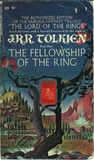
The Fellowship of the Ring (The Lord of the Rings, #1)The Fellowship of the Ring by J.R.R. Tolkien

My rating: 5 of 5 stars


This book is definitely a classic for a reason. I admit, I began it in large part to placate my sister and to check off one of those "I can't believe you still haven't read that" books off my list. I don't know exactly what I was expecting, but I guess I was expecting it to be a little bit more geeky. A conversation I once had sums it up really nicely: it's not fantasy, because it's written to be more believable; the elements of "magic" are not over-the-top impossible, but in a future state of our universe could be seen as plausible. However, they serve more as thematic elements, extensions of the better part of human virtue. It is also written with the air of a historian; Tolkien was really fleshing out the history, culture, and language of a land that he had invented so completely that it could very well exist. Thus it would be more like historical fiction. However, this it cannot be, as that genre is usually rooted in actual historical fact, and as much as we wish it were true, Middle Earth does not actually exist anywhere but the imaginations of we the readers. Thus we concluded in that conversation that The Lord of the Rings is fictional history.

I'm not sure whether I consider it a pro or con, but Tolkien spends and extraordinary amount of time describing the scenery, painting the environment with words descriptive, but not overly flowery. If I had attempted to read this when I was younger, there is no way I would have gotten through it. Those kinds of passages take a lot of concentration for me, especially when they matter so much to the story and the experience of Middle Earth as a whole. I don't know if it was because I wasn't paying attention well enough by that point, but after Lóthlorien, I got really directionally challenged as pertained to descriptions of the compass rose. But as it ultimately doesn't affect the fate of the quest, I contented myself to understand that Mordor lies ahead and it is to that destination that the fellowship is reluctantly moving.

Pros:
The hobbits are characterized extremely well, especially if one reads the introductory material. They may seem simple folk, but their motivations and culture are nonetheless engaging and understandable and do not give the impression of flat stereotypes. It is interesting that they can be at once so old in years, at yet so young at heart.

The passages pertaining to characterizing Aragorn are exquisite. He is given such an air of mystery, yet you know that behind the shadowy façade, there are incredible depths. He knows so much and has such strength yet reserve, such patience. What I want to know is when he found time to gain such experience and knowledge. And when he sleeps. It seems like he never sleeps. But I guess that is one of the signs of greatness in any good literary leader. Anyhow, when we are first introduced in Bree, I was practically screaming at the hobbits to trust him. Why would they not? Couldn't they feel the good intentions radiating from him? But then, I'm coming from a biased hindsight position.

Getting to Rivendell was a delightful journey, probably the most compelling for me. Glorfindel is such a fantastic character who plays really well off of Strider. It is awesome to see how men and elves really can work together and each can contribute equally to the success of all. The bit where they came across the trolls added a nice levity to an otherwise grave situation and is a nice cameo to The Hobbit who came before.

The council of Elrond was one of my favorite parts. All the elements of the story are woven together in such a way that you get the entire picture of just how grave the situation of the world has become. Yet it isn't pedantic or dull, one character after another droning on and on about what happened in their region. It is all tied together beautifully, centered around the issue at hand and what is to be done with the Ring.

I particularly enjoyed the incident at the pass of Carradras. It was so artfully thought out, and really adds to the validity and characterization of the Ring itself. The concept that the landscape itself is taking sides in preparation for the great conflict to come is beautiful. Along that same vein, the incident in the forest with Tom Bombadil was incredibly intriguing. That there could be anyone so impervious to anything but his own affairs when such a polarizing effect is going on in the rest of the world is interesting. Yet it would take just such a person to be able to care for a place such as the forest, so confusing and befuddling to those with a narrow view of their desired direction of travel. Moria was a good episode, and much as I hate to admit it, the film adaptation was playing through my mind throughout, particularly the soundtrack; that part is very well done, I might even venture to say better than the book.

Cons:
Tolkien is so enthralled with his scenery and languages that he often fails to develop his characters. Legolas and Gimli were two such characters; it's almost as if he forgot they were part of the fellowship until he decides to through some racial/political bits in and they uses them to spar. You don't get a good sense of where they have come from or what is most important to them.

The songs got a bit longwinded at times. But that's me being picky. In point of fact, I'm rather impressed that everyone is so well-grounded in their traditions and can use that method to transmit their histories to others. It makes me wish we in the real world knew so much about where we have come from and could recount it more artfully than to recite dates, names, and places.

Overall, it is a great book. Great themes: friendship, standing against evil, treachery and betrayal, the corrupting influence of ultimate power, and the virtue found in simple things. Despite my poor initial motivations, I am better for having read it.


View all my reviews

Thursday, May 15, 2014

Another enchanting review of Charlie Bone

Charlie Bone and the Invisible Boy (The Children of the Red King, #3)Charlie Bone and the Invisible Boy by Jenny Nimmo

My rating: 4 of 5 stars


Once again, Charlie Bone has proven an enjoyable diversion. The question of invisibility must always come up in any good magical series, and the treatment of the theme here was fascinating. I've never thought about it before, but there is something inherently deceitful about hiding one's presence, be it in darkness or actual disappearance. Thus, powers of invisibility could be seen as evil and undesirable, which angle I've never considered.

It's also interesting to consider that this is the second time that misfortune has befallen a character just because he was curious. It's interesting that these curious characters also seem to be fairly helpless when it comes to resolving their situation. Ollie didn't do anything to help, yet it was pretty clear that he wasn't being watched very closely, so it would have been fairly simple for him to play a more active role in his rescue. To me, curiosity and cleverness seem to go hand in hand, so he ought to have been more forthcoming with suggestions for a solution.

Pros: I am SO glad they have finally started making up with Billy. I could sense all along that he really belongs on the good side. But upon closer reflection, I realize that Billy has needed to engage in this development to realize that even though he is small and alone and scared, he still has the power to resist the opposition and make a difference. He's not just a weaselly little spy whose services are given to the force which provides the best benefit.

While it was a bit frustrating, the Yewbeam castle encounter for Patton was a really good move; I hope this means that he will become a more active force who is in control of his endowment. His taking a stand against his sisters has been really fun to watch. I'm not sure how I feel about the attempt to test his "relationship" with Julia. I think there is enough instability in Patton's life and it would be really good to just allow that to be the one good thing in his life, perhaps even the significant driving motivation.

Cons: I was surprised by the coat-turning of Scarpo; that was unexpected, but definitely not unwelcome. However, I wish that the wand would have been a more prominent presence if it was going to be introduced as belonging to Charlie and being so powerful. It needed to be more important to the plot development and conflict that it was. As it stands, it was almost more trouble than it was worth, what with letting Scarpo and the mouse out and the havoc it wreaked on the city, etc.

I wanted the explanation and denouement of Mr. Boldova's situation to be more clear. All of a sudden, he just appears with his memory intact from the Aunt's burning house? I'm not convinced. And how was it so easy to kill a shape-shifter? We can just electrocute them? It seems that, if that were a way to kill her, she would have been more wary of being next to such appliances, especially when she is intimately aware of Patton's endowment.

Cons notwithstanding, this was still a plausible plot line and an entertaining story.


View all my reviews

Sunday, June 9, 2013

The Intrigue of Artistic Scandal

The Forger's Spell: A True Story of Vermeer, Nazis, and the Greatest Art Hoax of the Twentieth CenturyThe Forger's Spell: A True Story of Vermeer, Nazis, and the Greatest Art Hoax of the Twentieth Century by Edward Dolnick

My rating: 4 of 5 stars


Initial thoughts on completion:
This was a really fascinating book. It combined several of my favorite subjects, and in some cases informed new interests - history in general, World War II, Nazis, art in general, Vermeer, Dutch painting, forensic analysis, psychological motivation, crime, and detective work. I feel like a much more rounded person having read this. It was fascinating to watch the story unfold and Dolnick did a great job of providing other examples and similar scenarios to explain and inform. One of my favorite quotes, that I feel really embodies the essence of the book (and my interest in it) comes from the 5th chapter: "We turn to science to free ourselves from the fallible judgments of human experts, and we find that the scientific tests themselves require human interpretation." I have a much better appreciation for the science that is the job of an art critic, and a better realization of the intricacy that is history. I like to think that I know the truth, or have the skills to discover it, but now realize that reality is subjective and largely up to our own perceptions and the lens through which we view it. Eventually the entire mess will be untangled, but until that happens, we must take the information we have and formulate our opinions and understandings. It is important to retain an open mind while doing this, however, because as new information surfaces, our opinions may need to be altered.

Reasons to read:
If you have any interest in art, art crime, or World War II, this is a great one. It's definitely different than most books out there (at least, that I've read to this point). The chapters are really short, which (let's face it) are a plus, especially if you are a busy person with limited time for recreational reading. It is very clear and the story is easy to follow. Even though you know how it ends - Hitler dies, they catch the forger (not a spoiler - the book would not exist if we still thought they were authentic Vermeers) - the twists and periodic change in focus keep it interesting. I found my sympathies shifting, first against and then for Van Meegeren and back again, hoping the Nazis find treasures, then hoping they fall for the fakes, then feeling bad for their gullibility. Overall, I'm glad I bought it.

Cons:
It makes you want to know so much more about all the smaller side scandals and historical points brought up, so it's going to be a huge time sucker if you follow all the new leads and questions it opens up.

Favorite part:
Probably when the actual process of forgery was explained. Who knew it took so much work to make something new appear so old? The tricks he used were ingenious, and it was described very well, which is commendable, as technical explanations and jargon can become laborious at times.

In summary, a great book for many interests and worth the time it took to read it.


View all my reviews

Wednesday, March 6, 2013

The Best Story I've Read in a Long While


War and PeaceWar and Peace by Leo Tolstoy
My rating: 5 of 5 stars

This was an awesome book! Definitely my new favorite. I really liked Tolstoy's consideration of the themes of life and death and their concurrence. This book has everything - love, revenge, forgiveness, disillusionment and the need for self-criticism, sacrifice, finding joy in everyday life, and some really great lines that resonated with my beliefs of eternal families. There is so much depth, I feel like I will need to read it a few more times to truly master it, but this first time around was a great eye-opener into the greatness that is Tolstoy. Natasha and Anatole's encounter almost drove me insane! I was not a big fan of Andrei, but I can appreciate his thematic significance. I will admit, I didn't care for the second epilogue, as Tolstoy had already presented his thoughts on how history should be written and there wasn't anything new presented or any grand unifying conclusion. However, I understand that it was his intention not to create a conclusion, which strengthens his point. This is a fantastic read! Absolutely worth the daunting 1400 pages.


View all my reviews

Wednesday, December 21, 2011

A Dose of Suspense

Death du Jour (Temperance Brennan, #2)Death du Jour by Kathy Reichs

My rating: 4 of 5 stars


This was a pretty fantastic read, right up with the first book. Reichs really knows how to keep up the suspense. I love how she keeps multiple story lines going and then weaves them all together in the end. It's not just about one murder; the whole world doesn't stop just because one person got killed and they have to investigate. And yet despite the mounding casework, midterm exams still need to be graded, students need help, and family problems persist. The fact that they still find new cases while current ones are open, as well as the fact that regular life continues outside the LML helps to put it in better perspective. People really do this.


*SPOILER ALERT*


I'm really glad she didn't kill off Harry in this one. The formula seemed very similar to her first book, so I thought that might happen. I think that was better. Maybe it would have been poetic - Brennan can figure out what happened to people, yet she can't save the living or protect her family from the carnage that surrounds her life - but if new traumatic experiences of lost loved ones continued to compound throughout the series, Brennan would become an emotional wreak, or else unbelievable as a character. I think her cat scare (which I'm SO glad was false!) and the cult encounter, along with Ryan's near-death brush was enough for this time around.


*END OF SPOILERS*


The discussion of cults really presents an opportunity for contemplation and introspection. It calls to attention the way we think and interact with the world. Are we being diluted and blinded by those around us, or are we making our own decisions? I always appreciate the opportunity for evaluation and this fit flawlessly into the plot. Very well written in that regard.


There was a bit of scandalous-ness that could have been done without. I think the attempt was to humanize Brennan more, but I think there is plenty of that. She really does ache for the victims she sees and she is not immune to fear or injury.


As far as the murders themselves, I always like seeing the description of the lab work and her interactions with the Québecois. I wish there would have been more elaboration on the reason for the disembowelment as well as the ring symbol on the skin. I also missed an explanation of where the Rohypnol came from, but I suppose those are minor details.


The imagery is superb; I love the way she uses the weather to heighten the suspense as well as to reflect the moods. Overall it was a fantastically thrilling read. I'd pick it up again anytime.


View all my reviews

Saturday, November 26, 2011

Time for a Review

Murder at the Vicarage (Miss Marple #1)Murder at the Vicarage by Agatha Christie

My rating: 4 of 5 stars


I thought it was pretty well written and moved at a good pace. I didn't see the end coming at all, which was fun, but frustrating at the same time. I wanted to see more of Miss Marple, but I thought her character was very well developed - not too pushy or nosy, but with a sort of mystery about her own person that lent credibility to her skills of observation. Lettice was really irksome to me, but I couldn't help feeling for her at the end. I liked seeing it from the Vicar's point of view as opposed to an omniscient one; I could try to figure it out along with him, as opposed to just being told what to think. You also get his biases and mortal weaknesses, which are valuable in realizing that it is truly difficult to obtain a purely factual view and which also leads credence to him as a character. Christie was wise to take this path I feel, because as a writer who knows how it will end, it would be extremely difficult to achieve that unbiased anonymity. Coming from seeing the movies first, I thought I would want to read it from Miss Marple's viewpoint, but on reflection, I think that would be just as unsatisfying as an omniscient voice. All in all, an enjoyable read.


View all my reviews